
[wadiz makes ESG #better]shares the stories of makers and supporters who have put “habits that save the planet” into practice by participating in Wadiz funding campaigns.
“I wear supercars”
“High-quality cactus leather shoes that are stain- and wrinkle-resistant”
“A Cool Ice Knit Made from Recycled Polyester That Cares for the Planet”
People who share the same values come together to build a better world “together”
This is likely why so many people participate inWadiz,” going beyond mere “consumption” or “investment.”
In the first installment,
we looked at the value created by the big and small habits that save the planet in our daily lives, expressed in numbers. When converted into trees, the value generated through the Wadiz campaign was equivalent to the cost of planting a staggering 64,000 trees.
( ▲Click here to see the value created by habits that save the planet: “6.3 billion, 110,000, 835”)
So, what were the areas where makers and supporters leading the charge in environmental protection were most active and participated the most?
Since the environment is essential to sustaining our lives, the answer lay in the three basic elements most closely tied to our daily lives: clothing, food, and shelter.

The category that accounted for the largest share was "clothing."
The fashion and accessories category accounted for a whopping 30% of all funding Wadiz. Of the total 6.3 billion won raised, approximately 1.8 billion won went to this category. In terms of the number of projects launched, it accounted for over 36%.
In particular, the number of supporters who have participated in eco-friendly fashion crowdfunding has reached a cumulative total of approximately 25,000.
In fact, a quarter of the 110,000 so-called “green supporters” have participated in fashion crowdfunding campaigns for clothing, shoes, and accessories!
“Recycled Poly Cool Ice Knit”
“Cactus Leather Shoes”
“Upcycled Tire Sandals”
“Premium Eco Fur”
etc.
Green manufacturers stood out for their eco-friendly practices throughout the production and shipping processes, ranging from environmentally friendly products to the avoidance of synthetic fibers and the use of biodegradable packaging materials.

Source: Shoe designer Ashley Lim, who unveiled cactus leather shoes
Why was this eco-friendly product first launched through crowdfunding?
Designers reportedly had to spend more time and put in even greater effort to find materials that are both eco-friendly and suitable for clothing and accessories. Here, we introduce the stories of various green makers, including those creating plant-based leather and eco-fur products to protect animals, those utilizing upcycled materials, and those incorporating eco-friendly materials throughout the entire process—from production to the packaging that reaches customers—as part of their commitment to ESG practices.
#Animal Leather Alternatives, Sustainable Materials
"Wicked Lover," the maker that raised a total of 83 million won by debuting its plant-based "cactus leather shoes" Wadiz

Source: "Wicked Lover," the company that developed loafers and boots made from "cactus leather"
“Is it possible to make shoes without animal cruelty or environmental pollution?”
Wicked Lover, a brand that found the answer to this dilemma in “plant-based leather .” Wicked Lover’s CEO, Im Ga-young, is a former architect who launched her business in Australia in 2014 with the dream of becoming a fashion designer. She worked as a shoe designer using animal leather for seven years, but as she began making her own products, she encountered ethical and environmental issues related to animal leather in the production process. She said she spent a great deal of time reflecting on and researching alternatives to animal leather.
Why is cactus leather eco-friendly?
They explained that cactus leather does not release pollutants even when disposed of, and since no harmful chemicals are added during the tanning process, it is harmless to both the planet and human health.
However, since this material is hard to come by in the market, the minimum order quantity for the fabric was high, and ironically, we found ourselves facing a situation where leftover inventory would be environmentally unfriendly. After considering various distribution options, we decided to turn to Wadiz crowdfunding.
Driven by the belief that we should grow not just as a brand, but as one that contributes to animals, the environment, and society, we launched a crowdfunding campaign and raised a total of 80 million won with the participation of 700 backers.
#Rediscovering Materials: Not Just Recycling, but "Upcycling"
"One billion" tires are discarded worldwide every year.
Although they were created for human convenience, discarded tires—which are either incinerated or landfilled—are causing various forms of environmental pollution.
There is a company that makes shoes from recycled tires. “Tread & Groove” has raised a total of approximately 50 million won through its upcycled tire shoes.

Source: "Tread & Groove," a brand that makes boots from recycled tire rubber
“From tires on the road to shoes on the sidewalk.”
Did you know that burning old tires releases a huge amount of harmful substances?
The brand “Tread & Groove” is a tire upcycling fashion brand with a mission to make the world a better place through “fashion.” They have recycled tires that have traveled 30,000 kilometers and transformed them into unique shoes that protect the environment. The brand stated that they have been operating as a social enterprise for four years, fully dedicated to upcycling, and have continuously conducted research and developed new products.
“The bigger our work grows, the more meaningful it becomes.”
These “handmade shoes” crafted from recycled tires—produced using only eco-friendly methods, without any heating or chemical processes—are set to be launched through crowdfunding. They are the result of a search that took us to over 40 to 50 handmade shoe factories, and they are crafted by master artisans with over 30 years of experience.
Described as a maker who creates new frontiers through recycling, the project has attracted continued funding from many supporters.
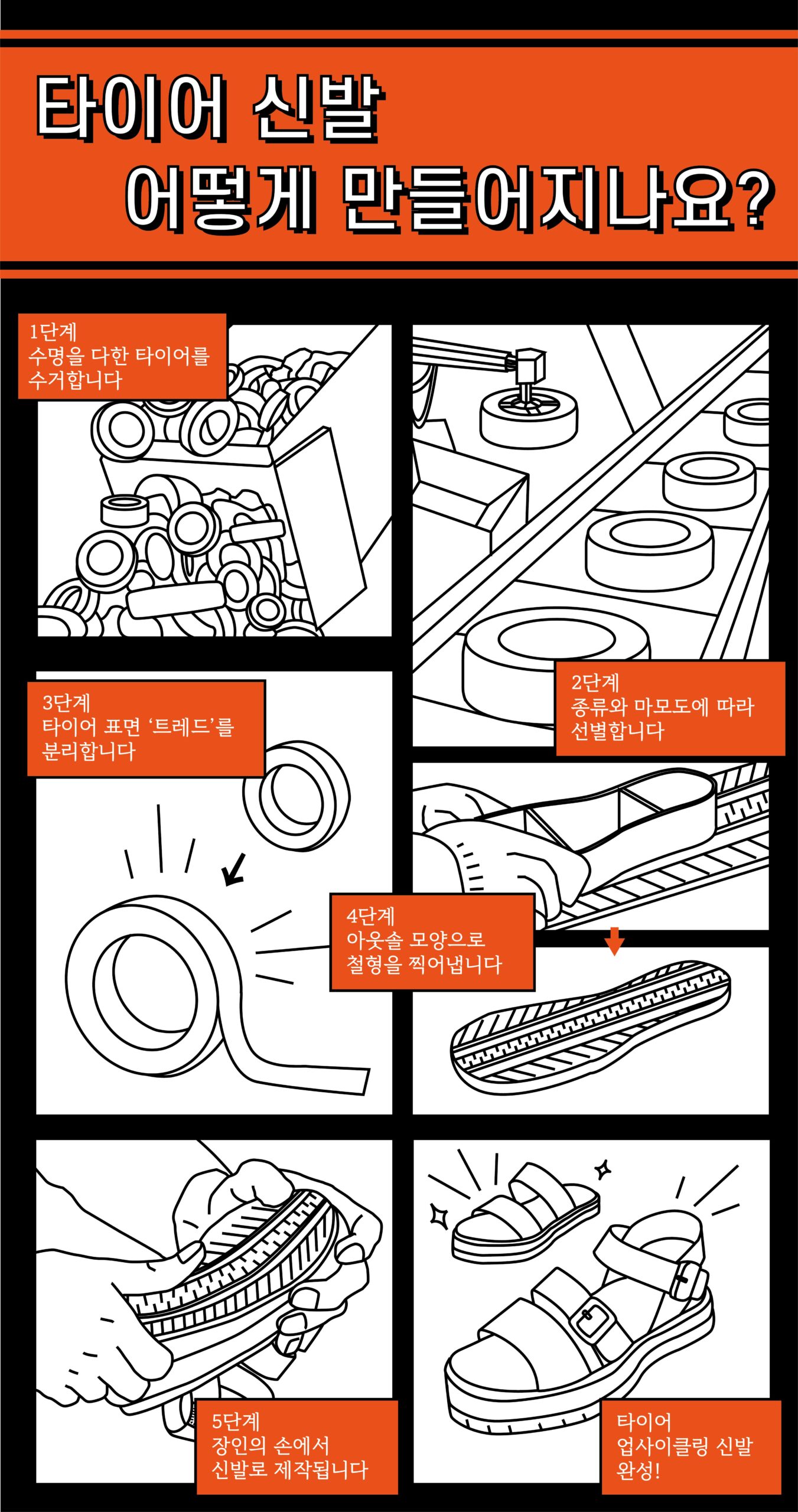
Source: Tread & Groove Funding Project
#Recycled Polyester: Join the Effort to Protect the Earth
Even without the “eco-friendly” label, this design is rooted in the product’s inherent appeal. It’s a cool, stylish summer knit that holds up perfectly in the wash—and it even helps protect the environment by using recycled polyester yarn.
This is the Cool Ice Knit, launched by the maker “210” through crowdfunding. With cumulative funding of 1.1 billion won in 2020 and over 10,000 supporters, this maker has been growing alongside Wadizsince its inception.
While 210 has launched numerous projects, the product introduced this summer was a knit made from GRS (Global Recycled Standard)-certified recycled polyester fabric. By showcasing the recycling process and including a recycling label, the brand successfully encouraged backers to make value-driven investments.
Thanks to the support and encouragement of many people, this project became the all-time top-ranked project on Wadiz Green Funding.
With approximately 1,000 participants, the project raised 74 million won, attracting the attention of value-conscious consumers.

Source: Cool Summer Knit Developed by Maker '210' Using Recycled Polyester
“1% for the Planet”
: 1% of the funds raised will be donated to “1% for the Planet.”
Finally, there’s something that the makers we’ve introduced today and many other green makers have in common:
When you participate in projects by makers who strive for a sustainable lifestyle while protecting the environment,
you’re supporting brands that are members of “1% for the Planet,” an organization that donates 1%of proceeds to save the planet.
“1% for the Planet”is a nonprofit foundation founded by Yvon Chouinard, the founder of Patagonia. Member companies donate 1% of their annual sales to support environmental organizations around the world that work to protect and restore the environment.

Wadizis still looking for Green Makers who are protecting the environment through crowdfunding.
*Green Maker 2021 (link)
Wadizsupports the success of Greenmakers, who are driving sustainable growth through crowdfunding and protecting the planet.
Go toWadiz
Get Started withWadiz
The A to Z ofWadiz Go to Maker Center
Get Answers to Your QuestionsWadiz