Everyday life is busy yet monotonous, complex yet repetitive. Travel, on the other hand, can instantly reset this tangled routine and realign our scattered minds. Today, we met Kang Hee-young (BX Team) and Moon Yeon-i (Marketing Team), both makers who have been working on side projects and members Wadiz. The side projects these two professionals have been working on somehow exude a fresh vitality reminiscent of travel. We sat down with Kang Hee-young and Moon Yeon-i, who set out on their own to discover the joy of wandering.
What is a side project?
Balancing a career with a passion project
Working a day job while pursuing your own side project
Interviewee
Kang Hee-young (hereinafter referred to as Hee-young) │ Launched a crowdfunding campaign for graphic T-shirts as the first project of studio aop. "aop" stands for "and other projects"; the name was chosen to signify a commitment to pursuing creative work and projects aimed at self-fulfillment outside of regular business activities.
문연이 (아래 연이) │책 <알 바야 쓰레빠야>으로 펀딩을 진행. ‘내 책을 만들어보자’라는 생각으로 책을 만들기 시작했습니다. 책에는 온전히 나 자신이 되어가는 과정을 담았습니다.
Interviewer
Hwang Mina (Mina for short) │Wadiz Marketer & Editor. I have 100 ideas for side projects—but I haven’t been able to put any of them into action yet.
Starting a Side Project as a Working Professional
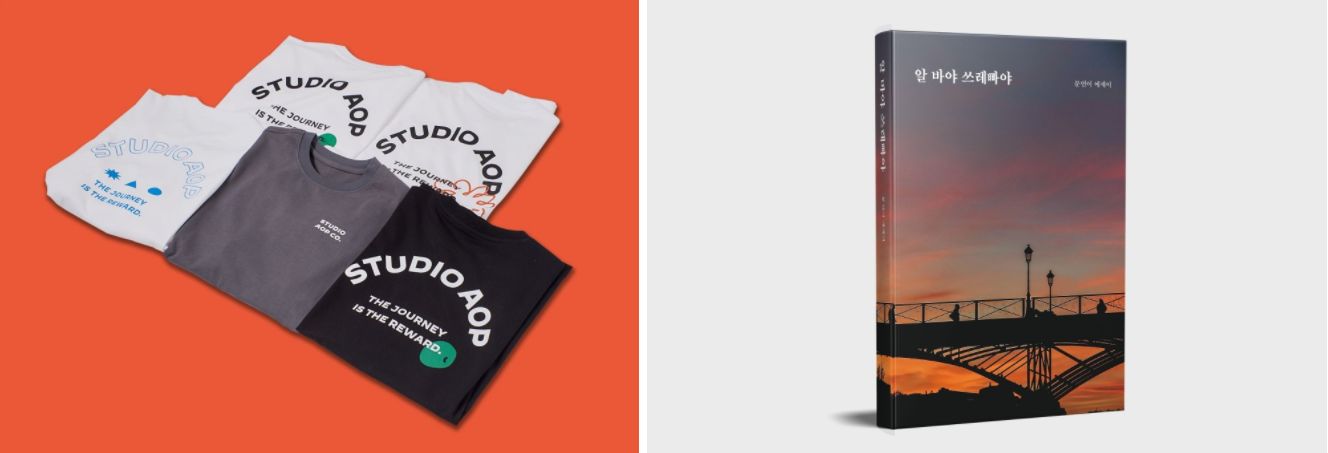
A side project by STUDIO AOP and Moon Yeon Maker
It’s amazing that both of you are able to produce work on your side projects while holding down full-time jobs. I’m curious to know what inspired you both to take on these side projects.
Heeyoung : For the past two or three years, I’ve been thinking about starting my own brand. But since I tend to prefer a sense of security, it was hard for me to quit my job and launch my own brand. So I was thinking, “I’ll just do it while I’m still working at the company.” Then, while talking with my director, I heard about the “72-Hour Rule.” The idea is that if you make a decision, you have to take action within 72 hours; that way, the chances of actually following through—even later on—are higher. As soon as I heard that, I decided I had to tackle at least one of the projects I’d been putting off. So, I spent two days revising a design I’d already worked on and placed a small order for T-shirts. I did it with a lighthearted attitude, thinking, “I’m going to wear them myself, so I should get them made quickly. I’ll make a small batch, and if the response isn’t great, I’ll just drop it.”
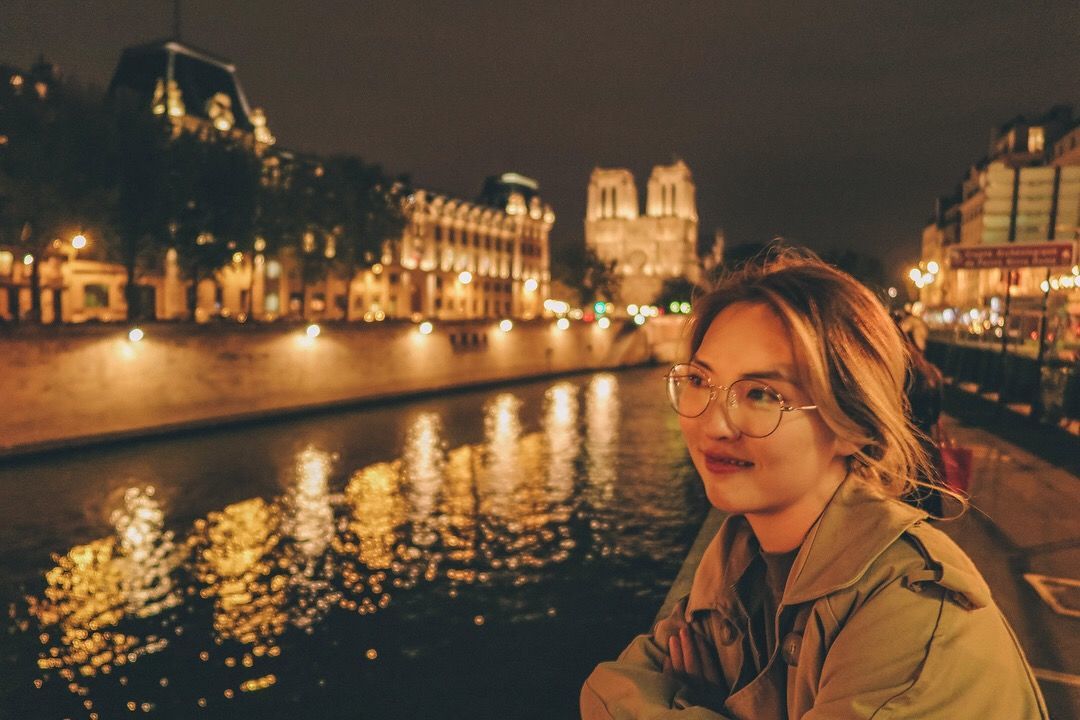 <알 바야 쓰레빠야> 를 독립출판한 문연이 메이커
Whenever I felt my resolve waver or my thoughts became chaotic, I would write to steady my mind. As my writing accumulated, I began to think, “I should try publishing my own book.” So, in early 2019, I attended a lecture on self-publishing to see if I could actually publish a book. Even after that, I hesitated a lot, wondering, “Can I really publish a book with this?” and “Isn’t this too much TMI?” But the lecturer told me, “Just go for it. You can’t please everyone.” I kept repeating those words to myself, and that gave me the courage I needed.
It's really impressive that you worked on a side project while holding down a full-timejob. I haven't even been able to get started on one myself.
I’m sure everyone thinks it’s hard to put into practice, but for me, it wasn’t as difficult as I expected. Of course, I did get busier than usual. (Laughs) Since there were so many things I had to relearn, it felt like a source of energy even in the midst of all that busyness. At that time, I really felt like, “I’m truly living life to the fullest.” It also felt like I was rediscovering myself outside of work. I used to worry that it might be too hard, that it would take up too much of my time, or that it would cost too much money, but now I’d definitely recommend it to anyone who has something they want to do.
 Kang Hee-young, the creator of the AOP graphic T-shirt
Heeyoung: I work as a brand designer at a company. When you’re doing brand design, there are limitations that make it difficult to design anything beyond the brand identity. As I continued working on company projects, I started thinking about personal branding. So I thought, “I want to do everything I want to do.” That’s how it all began.
If you want to work on a side project while holding down a full-time job, you’ll probably have to carve out a lot of spare time here and there, right? How did the two of you manage your schedules?
Heeyoung: Actually, I talked a lot with my director about this side project. He was really supportive. I think that’s why I felt even more strongly that I had to make sure this project didn’t cause any problems for the company. I used to start working at 10 p.m. after finishing my regular work. I did a lot of work in the early hours of the morning, and even when I worked late, I was lucky that the company has a flexible work schedule, so I could get a good night’s sleep and come in the next day. 🙂 I also took a day off and crammed all my client meetings into that one day. So now I only have five days of vacation left. (Laughs)

Since I already had some writing material saved up, the pressure wasn’t as bad. Because I work late so often, I couldn’t focus on the project during the week, so I made the most of my weekends. Some days, I’d grab my laptop and head to a café in the morning to work on the manuscript all day, and other days, I’d go to Chungmuro early in the morning to feel the paper and run color tests. (The shops in Chungmuro close early on weekends.) Since I was writing, proofreading, designing, and even creating the cover all by myself, it took a little longer to finish. I had originally planned to launch the crowdfunding campaign in November to coincide with my birthday, but I finally managed to release it on December 16, 2019—or was it...?—right at the very end of 2019.
The Joy of an Unfamiliar Routine

I imagine working on a side project like this is full of new experiences for you. What were some of the challenges you faced along the way?
To be honest, Hee-young, it was a total mess at first. I was originally planning to do this with a friend, but while we were drafting the patterns, my friend got caught up in her company’s policy against holding a second job, so I ended up doing it all by myself😂. I had no idea where to start, but the people around me really helped me out a lot. My case wasn’t just about printing on T-shirts—I actually went through the entire production process, from selecting the fabric to screen printing and drafting the patterns. At first, I hadn’t planned on handling production myself, but when someone passing by said, “You’re doing the printing, aren’t you?” I got a bit competitive (?) and thought, “I should try starting from the very beginning of T-shirt production! What’s the worst that could happen?” So I went for it. In the end, I’m glad I handled the production myself. Everyone’s been telling me how pretty and well-made they are.
Since everything was new to me, it felt unfamiliar and awkward. First of all, proofreading and editing were incredibly difficult. I ran the text through a spell-checker multiple times, and whenever I came across something that sounded awkward while reading, I looked it up directly on the National Institute of the Korean Language’s website to verify it. I think I read it at least ten times. As I read, many thoughts crossed my mind, but the one that came up most often was, “What if people backed the project or bought it because of the design, but then were disappointed by the writing?”
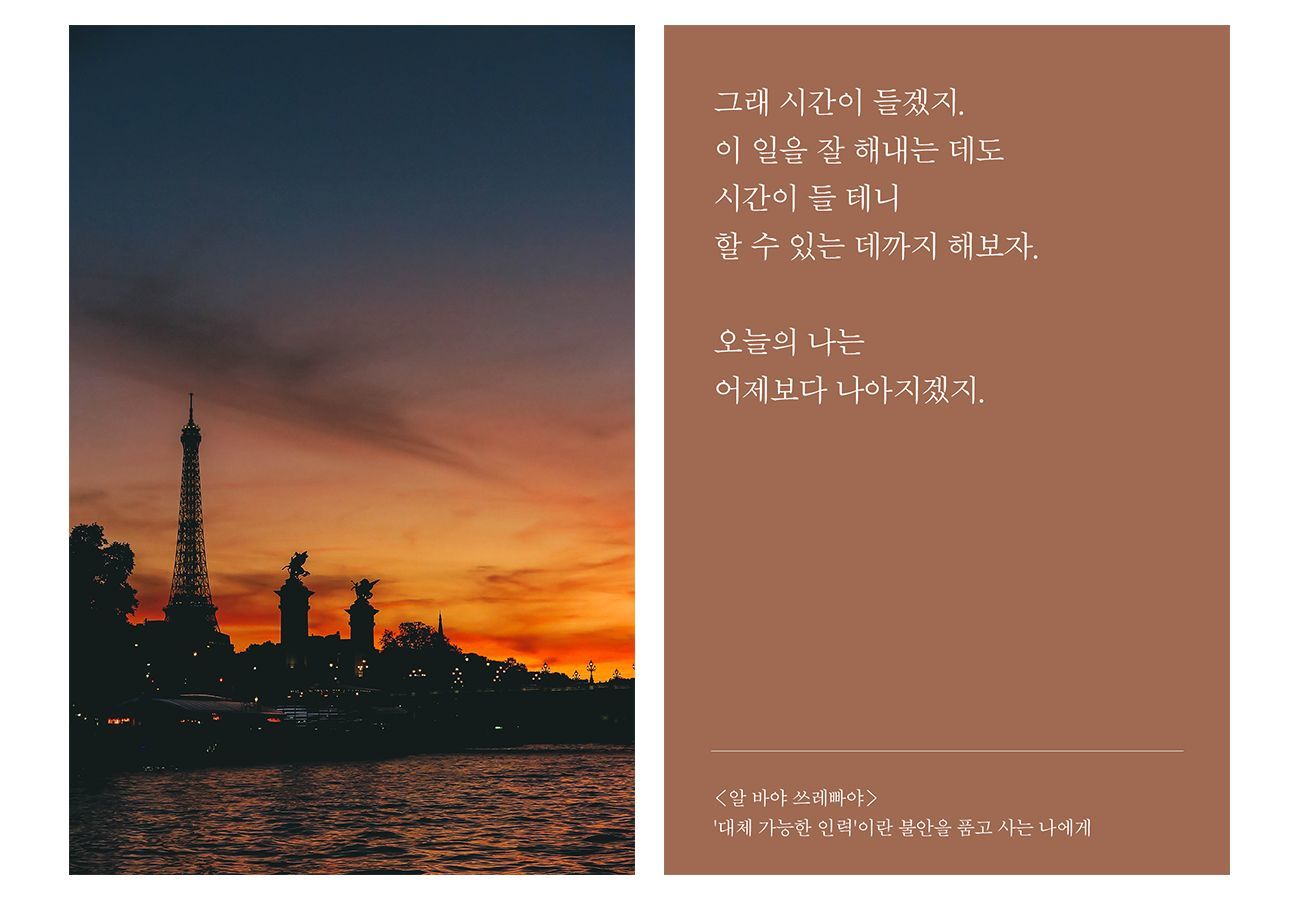
Once I finished writing, I started worrying about the design again. I used InDesign for the interior layout. I learned the program through YouTube tutorials and designed every single page myself. I tried to do the cover design to the best of my ability, keeping in mind that my goal was simply to get it published, even if it wasn’t perfect. Since I was working within my own limitations, I ended up choosing photos that complemented the content rather than illustrations.
Just hearing "Mina" sounds so fresh. Despite the challenges you faced during production, what motivated the two of you to complete this side project?
Yun: I imagined the weight and texture of my book in my hands. Since I started this because I wanted to create my own book, I kept picturing the final product.
Heeyoung:It’s all about pressure and deadlines! (Laughs) Once you tell people around you that you’re working on a side project, you really have no choice but to follow through. I launched a crowdfunding campaign for short-sleeve T-shirts. Since we started at the end of May, it was a real race against time to get everything ready for the summer season. After we launched and met with Wadiz, I thought, “Now there’s absolutely no turning back.”

Mina, both of you have now completed your side projects. What did you take away from them?
As I go through life, I discover different sides of myself. It suddenly occurred to me that “life feels too monotonous if I just work all the time,” so I started a side project. The moment your job becomes your sole purpose, it’s easy to get swallowed up by work and lose your balance. The best part was thatworking on this side projectallowedmeto vividly feelthat my life had found its balance. I also found that my side project served as an outlet for relieving work-related stress. These days, many people have various “alter egos,” so I decided I should cultivate diverse hobbies and consistently pursue the things I love to create several successful alter egos of my own.
Heeyoung: While working on this project, I felt completely overwhelmed at times and was physically exhausted. But more people cheered me on than I expected, which gave me the strength to keep going. That’s why I realized that a supportive environment is truly essential when taking on a side project. In our team, we often say to each other, “We really need to do a side project,” and we talk about how side projects help us grow as individuals. I think that kind of culture was a huge help to me.