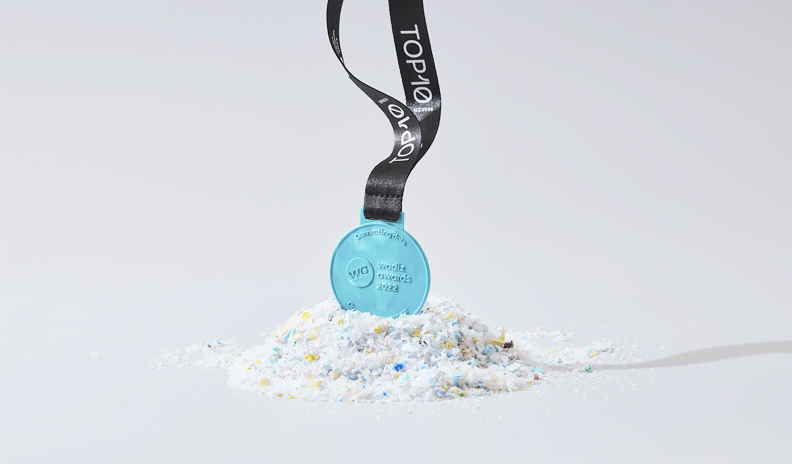

In early March, we received some exciting news: Lee On, CEO of “Tread & Groove”—a company that makes shoes from recycled tires—was named to Forbes’ “30 Under 30” list.
Tread & Groove is a brand that launched on Wadiz, and its first product is Chelsea boots (link). Since then, the brand has successfully funded campaigns for sandals and slippers, further expanding its fan base. It is also a brand that was beloved as a Wadiz Green Maker.
We sat down for a conversation with Ion, the CEO of Tread & Groove. Listen to the heartfelt story of a brand changing the world right now!
* This article is a reconstruction of an interview conducted in 2021.
Ion: The Essence of Every Step

Hello. I’m Ion, the CEO of Tread & Groove. We’re a brand that makes shoes out of tires. We’re an upcycling company dedicated to protecting the planet and caring for the environment.

These are the various types of "treads"
Q. Tread & Groove—that’s an unusual name.
What does it mean?
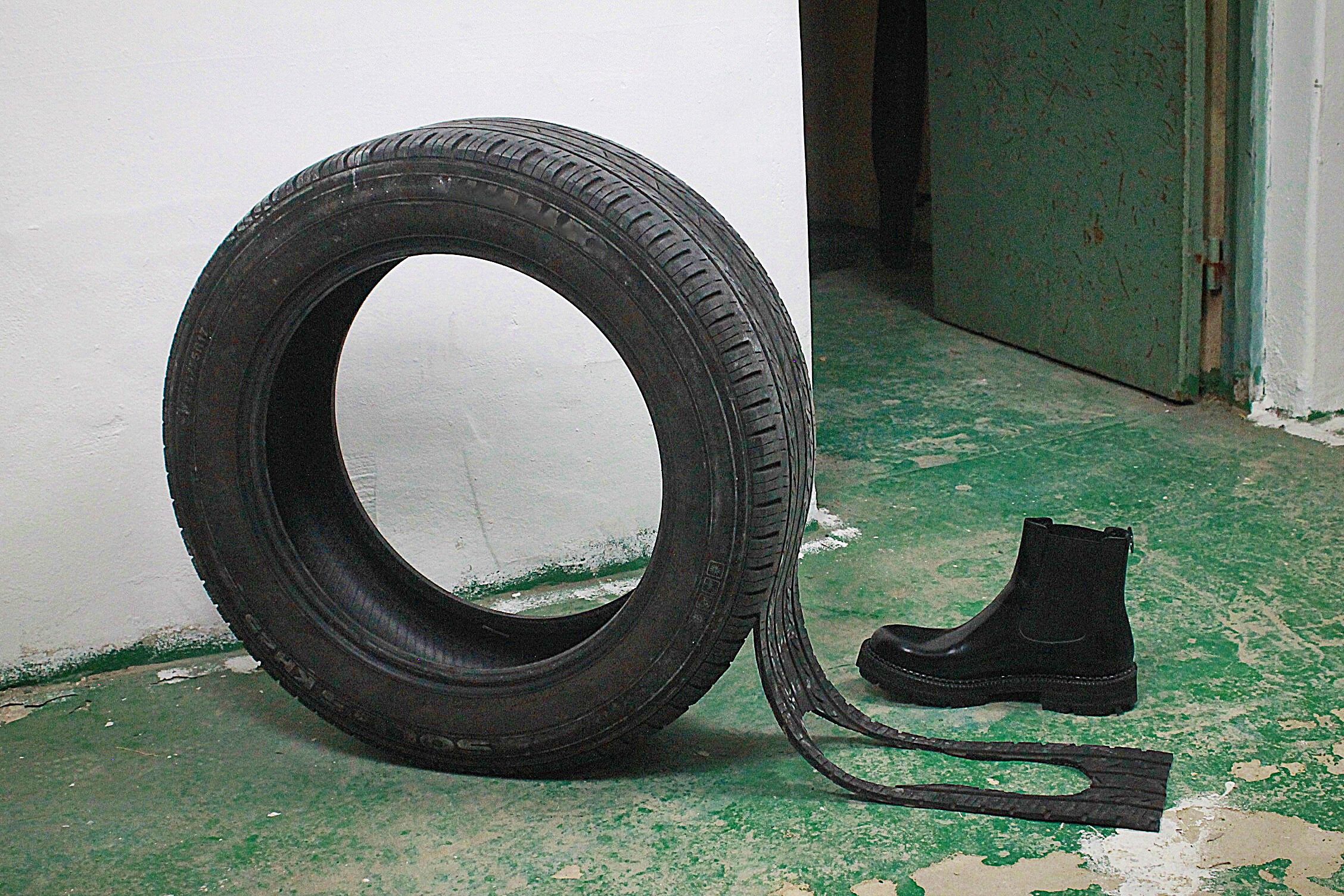
The tread refers to the part of the tire that comes into contact with the road surface, while the grooves refer to the patterns carved into it. In other words, it refers to the pattern on the part of the tire that touches the road.
Shoes made from roughly cut-up pieces?

A scene showing the production of tread and groove shoe soles
Q. I never would have thought of making shoes out of tires.
Where did you get this idea?
I saw a news report from overseas showing people in a remote part of Africa roughly cutting up tires to make shoes. It was their own way of protecting their feet on unpaved roads. While I felt sorry for them, I also thought it was a good idea. I became convinced that if we refined the idea a bit and made proper shoes, we could do something meaningful.
Q. When you saw the reality of the situation regarding used tires,
you said you were quite shocked, weren’t you?
While preparing to make shoes, I learned about the environmental issues surrounding scrap tires. Although scrap tires are generally managed fairly well in our country, I heard that other countries simply bury or burn them.
Globally, about 1 billion scrap tires are generated each year, and burning them releases enormous amounts of harmful substances. It might not feel like a pressing issue right away, but if you stop to think about it, it’s a truly serious problem.
Want to do something fun? Then come on over!

Q. How did you end up starting your own business?
When I returned to school after my military service, I wanted to do something fun. Since the term “startup” was popping up everywhere at the time, I figured a lot of people would sign up if I started a startup club. Back then, the school didn’t have a startup support team, so I asked a professor about the process and started looking for team members.
Q. Was it difficult to assemble a team?
First, I made flyers and posted them all over the school. The flyer read, “I don’t know much about starting a business either. But if you’re interested in this field and want to try something fun, just come.” Fortunately, team members started to join, and the three of us were able to get started. It was more of a small group than a formal club, but we gradually created opportunities for ourselves by participating in startup camps and competitions.
Q. It’s also impressive that the school provides these opportunities.
It was a university specializing in urban studies, and it was a place where I could learn a great deal through the broad and comprehensive field of sociology. My professors taught me many things that are easy to overlook in daily life. Environmental issues caused by discarded tires were one of them.
Can work really be this much fun!?


Q. Was it easy to find tires?
I went to a car repair shop near my school and asked for some old tires. The owners were suspicious and asked, “What are you going to use these for?” The first couple of times, I tried to explain, but later I just said, “I’m an art student and I need tires to make a piece of art,” and they gave them to me. I was able to get the tires by pretending to be an art student.

Q. What happens after I bring in the tires?
We started by taking them apart using craft knives, utility knives, and saws from the stationery store. We needed to see if we could actually make shoes out of tires. When we took them apart, we found that tires aren’t just made of rubber—they also contain steel wires and various other components. Through this process, we learned which parts could be used to make shoes and which needed to be discarded, building up our own database of findings.
Q. It’s been quite a rollercoaster ride.
It’s still just the beginning. I took the dismantled tires and headed to the handmade shoe district in Seongsu-dong. I must have visited at least 50 shops. I was turned away at the door many times, and with my low profile, there were plenty of challenges that felt overwhelming.

Q. I’m curious why you kept going despite that.
Were you confident about starting the business?
I wasn’t sure back then, and I’m still not sure now. (Laughter) All I know is that I want to do something meaningful. The more I encounter the various problems caused by scrap tires, the more convinced I am that what we’re doing will be of great significance in the future. Sometimes people ask me why I’ve chosen such a difficult path. Whenever that happens, I reply, “This work is just as fun as playing.”
Value that grows the more we work together

Q. What do you mean by "going out onto the streets of Seongsu-dong"?
You know how there are artisanal shoemakers in Seongsu-dong with decades of experience? We wanted to discuss whether it was possible to make shoes out of tires, and if so, how to go about it. With the exception of one or two places, most of them wouldn’t even give us the time of day. But a few told us it was possible, which gave us hope. Among them, we ended up working with an artisan who listened to our vision and found it intriguing.
Q. Was there a reason why they wouldn't even give me the time of day?
I think they turned us down because it was a new idea. Their reasons were things like, “If we put tires into the shoe-making machine, it might break,” or “We could make them, but we don’t have the time.”
When we analyzed the efficiency, we realized that using commercially available materials and methods could reduce time and costs by about a third. However, we placed greater importance on value. That’s why we didn’t give up on using tires as our main material.
Q. Was it
relatively smooth?
We were concerned about the costs. So, we explained from the very beginning that we planned to launch a crowdfunding campaign. Surprisingly, the artisans in Seongsu-dong were quite familiar with the concept of crowdfunding.
They understood just how little we had to work with and why we had no choice but to start from scratch. Since we were able to begin with most of their concerns already addressed, I think we felt a little more at ease.

Q. I heard you put a lot of effort into ensuring the quality of the finished product.
We put a tremendous amount of effort into processing the tires and adapting them for use in shoes. We researched whether conventional shoe adhesives could be used and whether it was possible to sew the tires.
However, the quality and craftsmanship of the shoes are largely due to the artisans’ hard work. While we provided the experience of using tires, the production know-how, and eco-friendly values, the artisans were responsible for everything else that went into creating the final product.
Q. I heard you’ve filed a patent?
We have filed a patent for a machine used in the tire processing stage. We have also filed a patent for the shoe manufacturing process that transforms the processed tires into shoes.
Of course, this wasn’t achieved by us alone; we’ve secured these patents thanks to the tremendous efforts of the engineering team, the shoe factory’s R&D department, and the production staff.
Funding: More Than Just Funding

Q. Even though this is such a complex and difficult process,
is there a reason you remain committed to fashion upcycling?
In the past, fashion was produced quickly and consumed just as quickly. But these days, people care so much about the environment that we’ve even coined the term “sustainable fashion.” That’s why I believe fashion upcycling is important now and will continue to be important in the future. So I have no choice but to stick to it. People who resonate with our shoe designs and values tell us they find them truly unique and enjoyable.
Q. What is the goal of Tread & Groove?
Some people ask, “How much of the tire problem can really be solved by making shoes out of them?” But when I think about the environment, I believe that small initiatives like this can serve as a catalyst. We tried making shoes, but if someone else comes up with a better way to use tires or finds a way to recycle them, I believe we’ve provided an important starting point.

Tread and Groove Logo
Q. Is there anything you’d like to say to everyone reading this interview?
There’s a saying that “one step taken by ten people is more important and valuable than ten steps taken by one person.” It’s a saying I really love. I, too, believe that rather than one person struggling alone and working tirelessly to protect the environment, it’s more important to inspire many people to take small steps. Even when buying a single pair of shoes, if you choose upcycled shoes made from scrap tires, I believe that’s also a small but meaningful step. If many of you resonate with our values and take that small step with us, I would be absolutely delighted.
Where are your steps leading you? If you’ve felt even a little concern for the environment, I believe you’ve already taken a meaningful step. I hope your days are filled with more meaningful steps, and I’d like to congratulate Jin Kuk-in, CEO of Ion, on being named to the Forbes list. 🙂
Go toWadiz
Get Started withWadiz
The A to Z ofWadiz Go to Maker Center
Get Answers to Your QuestionsWadiz