Yeon Jin-guk, an intern researcher at the Funding Institute. Filled with determination and passion, Yeon Jin-guk has finally been assigned his first task.
“Hey, intern researcher, would you like to write a funding research log?”
Yeon Jin-guk, who got scolded on his first day of work for confusing "cloud" with "crowd" (
How on earth did you end up becoming a research intern?Will he actually be able to carry out the mission successfully?Here begins Yeon Jin-guk’s Funding Exploration Journal.
While people are born with certain traits, their personalities are also shaped by their parents and friends as they grow up. The same is true for services and products. A brand’s personality is shaped by the types of people who use it and the purposes for which they use it. (A brand’s personality created by its users… how romantic is that?)
So, what are the inherent characteristics of a funding platform? This is where the experience of an intern researcher at the Funding Lab comes in handy!
Based on my research so far, I’d describe them using these hashtags: #challenge #novelty #ideas #support. So, what about the acquired characteristics shaped by makers and supporters?
If the very nature of crowdfunding is to cast a vote of confidence in the philosophy behind an idea or brand, supporters will hesitate to back a project unless they feel, “This absolutely needs to exist in the world!”
Is this why? There are many commonalities among crowdfunding projects, whether we realize it or not. These commonalities can be described as the “character” of the platform created by makers and supporters.
In today's research log, we will discuss one of these topics: "eco-friendly."
Ways to Think About the Environment 1. Platforms
Whether by using eco-friendly materials, introducing products that directly benefit the environment, or donating to environmental organizations, numerous projects dedicated to environmental sustainability have launched in recent years, each in its own way. Many people eager to support these projects and products have turned to crowdfunding platforms. As if answering the call of makers and supporters, Wadizlaunched the the Green Maker Campaignsince 2021.

GreenMaker is a campaign in which the platform actively supports makers dedicated to the environment and sustainability, helping them connect with their supporters. Now in its fourth season, it’s safe to say that supporters, makers, and the funding platform have all taken a step forward together toward a better environment!
*Over the course of three seasons, a total of 691 teams launched funding campaigns on Greenmaker, and 75,419 supporters contributed to Greenmaker projects.
Ways to Think About the Environment 2. Zero Waste Even for Uncommon Products
Use reusable mugs in stores, shampoo bars instead of liquid shampoo, and reusable cups for takeout!
These days, there’s a growing movement to reduce waste in various consumer situations. While not buying anything would be the best way to avoid creating waste, that’s impossible in the 21st century—we’re no longer living in a hunter-gatherer society.
Efforts to go zero-waste are popping up frequently across various product categories and industries. However, the moment you step slightly outside the mainstream, you realize that zero-waste products are actually quite rare. This is because alternatives for zero waste are mostly everyday items, and their variety is limited. But in the world of crowdfunding, where there are valuable goals to achieve or where entirely new alternatives are welcomed, “limitation”? Beep—🙅♂️🙅♀️ That’s not a term we use here.
One such item is the medicine bottle. It’s that soft, transparent container with a pointed spout—filled with tearful memories from childhood—that we eventually part with as we grow up. Since medicine bottles aren’t everyday items like cups or toothbrushes, making the transition to zero waste isn’t easy.
But it would be a mistake to assume that just because I don’t use them, the amount being used and discarded is small. Reusable Silicone Medicine Bottle According to the project story by the maker Zup, the annual number of disposable plastic medicine bottles used in South Korea is 600 million.

Reusable Silicone Medicine Bottle "Zzup" / Source: [100 Million / Final Encore] "Zzup," the Reusable Silicone Medicine Bottle That Protects Children and the Earth
Medicine bottles are mainly used by children. Therefore, proper hygiene is essential. However, due to their shape and material, the standard medicine bottles provided by pharmacies are difficult to thoroughly disinfect and clean. As a result, they are often discarded after just a few uses.
Recognizing this inconvenience, Maker created a new type of medicine bottle that’s also good for the planet. They designed the container to be easy to clean and used platinum-cured silicone so it can withstand high-temperature sterilization. These two improvements make the bottle virtually indestructible and reusable. And, of course, using silicone helps reduce plastic waste!

Source: [100 Million / Final Encore] Reusable Silicone Medicine Bottles That Protect Children and the Earth, Chup
Ways to Think About the Environment 3. Thinking Differently from Others
It’s just that putting it into practice is difficult—but the truth is, we already know what’s bad for the Earth and the environment. Things like excessive waste, hard-to-recycle items, and materials that take a long time to decompose—such as plastic and vinyl. That’s why we try to show our love for the Earth and the environment by choosing paper over plastic and cloth over plastic bags.
But isn’t there a hidden truth we’re unaware of? Maybe we’re wasting resources like water without even realizing it, and deep down, we’re thinking, “Sorry, Earth!” That sort of thing. That I discovered a maker who faced this uncomfortable truth and launched a crowdfunding campaign with a new product. The maker’s product is hand soap.

Source: Is this really hand soap? Your eco-friendly, smart choice in hand soap!
A professional with 10 years of experience at a major cosmetics company. While working in the cosmetics industry, I pondered what truly helps the environment, and I discovered that it all starts with “water.”
Removing water from cosmetics naturally led to significant water savings. It also made it possible to reduce production costs. Furthermore, there was no longer a need for plastic or vinyl containers. Instead, recyclable paper was used. The reduced volume and weight made it possible to cut carbon emissions generated during transportation.
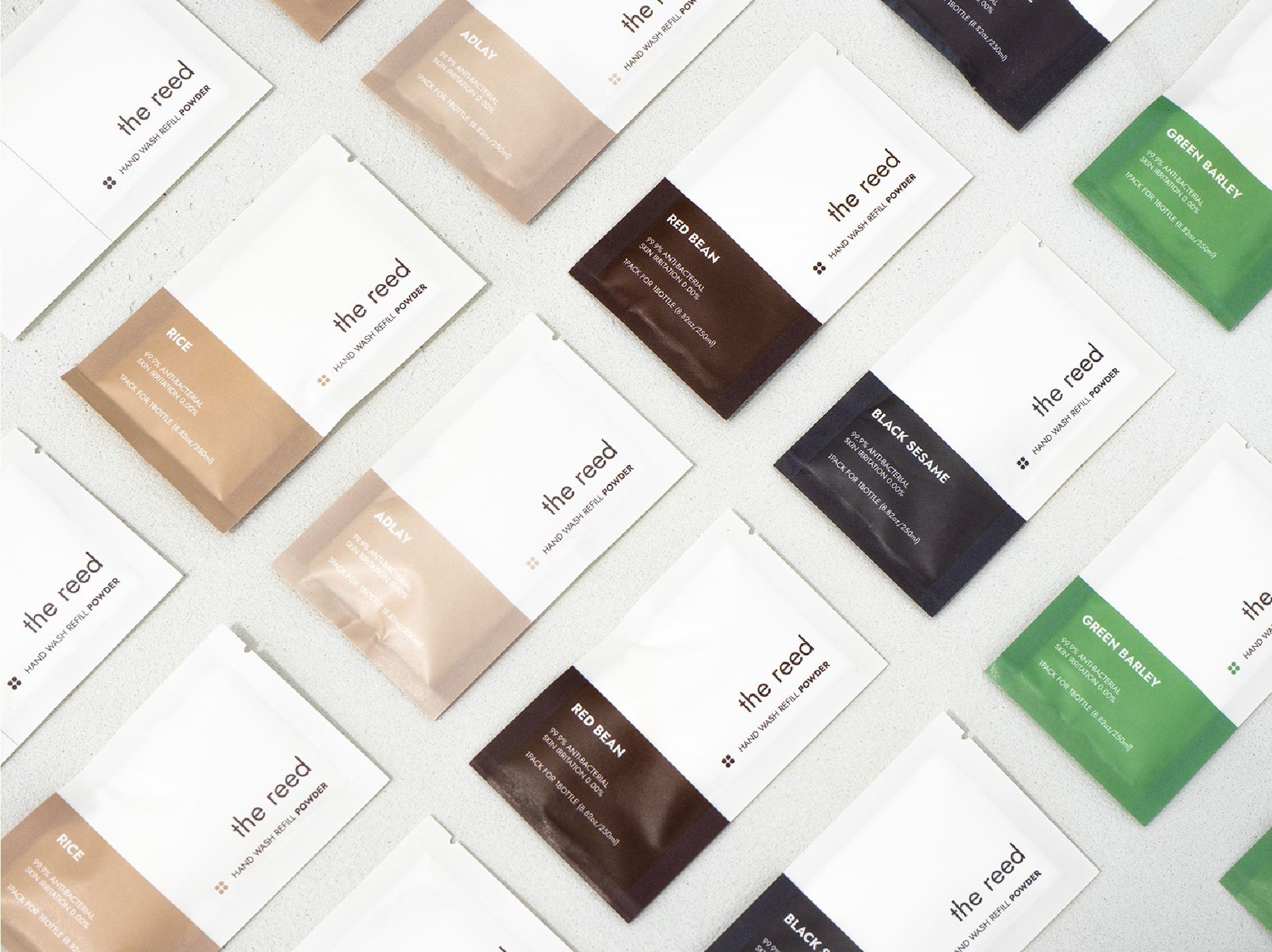
It’s not a facial cleanser—it’s hand soap! / Source: Is it really hand soap? Your eco-friendly hand soap for the smart consumer!
Maker's project went a step further than the standard environmental practices typically seen in the cosmetics industry, such as using eco-friendly containers and plant-based vegan ingredients. Although they merely changed the manufacturing process, this led to a domino effect of eco-friendly benefits in areas such as packaging and transportation.
Oh, thanks to this method of using solid soap in a glass jar, even people who are hesitant to use bar soap can practice “less waste”—if not “zero waste.” I’ve noticed that quite a few people around me find bar soap in public restrooms and restaurant bathrooms inconvenient for hygiene reasons.
Ways to Think About the Environment 4. For the Environment, By the Environment
While exploring eco-friendly projects, I came across a maker who is fully committed to sustainability—no matter how you look at it. “We research materials and develop products through design. We showcase a variety of lifestyle products through our sustainable lifestyle brand, Unroll Surface.”
On the Maker PageOn the Maker Page, the maker introduces themselves in a few short sentences. Naturally, “sustainability” stands out. As if to prove this point, the titles of the funding projects the maker has launched feature eco-friendly terms such as “made from bio-based materials,” “fully biodegradable,” and “recycled felt sleeves.” This company was undoubtedly founded to protect the planet 🤔
I found myself wondering what kind of company was so deeply committed to sustainability. Composed of materials researchers and designers, Maker’s slogan is “We envision the future through materials and design.” Creating products that are both environmentally friendly and visually appealing—I was convinced that this was what Maker valued most.
As it happens, the maker a mug project. “Am I about to open my wallet again?” I wondered fearfully, taking a closer look. The maker used natural materials with a wooden base to reduce the carbon footprint. Most of the mugs we use are made of plastic or ceramic. Of course, ceramic is harmless to the environment, but the truth is, we tend to reach for whatever is easier to use. Ceramic cups are heavy, making them difficult to use outside the home.
For something to become part of everyday life, it must first be comfortable. That’s why the maker chose materials like wood and stone powder. These materials are biodegradable. Instead of cutting down trees, the maker collected twigs and sawdust and upcycled them.

Source: Transform your desk with just one mug—introducing the Lit Cup, crafted from unique materials
"Vegan food tastes bland, and don't all eco-friendly products look the same?" These are common preconceptions—and yes, they might be true. The fact is, for something to become an everyday item, it has to be convenient and attractive. (After all, we live in a look-obsessed world where we only photograph food that looks appetizing!)
It seems the maker put a lot of thought into designing a cup that’s truly meant to be used continuously—not just a reusable cup with a pattern that gets tossed after a few uses. The mug features a simple design that makes you want to keep reaching for it. It offers various ways to use it—as a mug, a plant pot, or a pencil holder—all accompanied by photos that really make you want to own one.

Source: Transform your desk with just one mug—introducing the Lit Cup, crafted from unique materials

Source: Transform your desk with just one mug—introducing the Lit Cup, crafted from unique materials
Eco-Friendly Funding, Done My Way
Among the projects launched so far, there are as many initiatives focused on the environment and sustainability as there are stars in the night sky. They span a wide range of industries—including fashion, cosmetics, and food—and employ a variety of approaches, such as upcycling, charitable giving, and the use of eco-friendly materials. As mentioned earlier, the best way to protect the environment is to live a “micro-minimalist, self-sufficient lifestyle” by not producing and not buying. (Let’s try living like we did in the Neolithic Age!)
Since we all know it’s difficult, it’s safe to say that there’s no such thing as “perfect” eco-friendliness. That’s why there are no set formulas or right answers when it comes to being eco-friendly! Simply thinking about the environment and doing what you can in your own way is a great start in itself. What if those efforts accumulate and inspire many others to share the same concerns and make similar efforts? Then a future where everyone integrates the environment and sustainability into their daily lives could very well become a reality!
Funding Exploration Diary, Episode 6: That's all for now on eco-friendly initiatives.
(I need to go sign up for the mug notification...)
View other logs 👀
Episode 1: “My First Assignment Has Been Assigned”
Episode 2: “Funding: One Name, Several Meanings”
Episode 3: “One Heartfelt Story Is Worth More Than Ten Features”
Episode 4: “We Are Gen Z, Launching Crowdfunding Campaigns”
Episode 5: “Is There Such a Thing as This Kind of Crowdfunding? People Deeply Dedicated to a Single Cause”
Episode 7: “Let’s Go on a Special Trip with Crowdfunding”
Episode 8: “Workation: I’m Going on One Through Crowdfunding!”
Episode 9: “Trendy SNS Hotspots and Restaurants Make Their Crowdfunding Debut!”
Episode 10: “Showcasing Delicacies from Across the Country Through Crowdfunding!”
Episode 11: “Crowdfunding: A Dash of Excitement for the Good Life”
Go toWadiz
Start aWadiz Project
The A to Z ofWadiz Go to Maker Center
Get Answers to Your QuestionsWadiz