
In 1993, a college student set off for Europe on a whim, eager to experience the sweeping tide of globalization firsthand. When he arrived in Europe with his heart full of dreams, he found that no one there had ever heard of Korea. Seeing people tilt their heads in confusion at the mere mention of “Korean,”his pridewas wounded, and he vowed to himself that he would make sure they came to know Korea.
Twenty-seven yearslater, he has becomealeadingadvocate for Korea. We sat down with Professor Seo Kyung-deok, who has continued his efforts to promote Korea to this day— not for recognition , but simply because he believes the world needs it .

Q. You’re already very well-known, but could you please tell us a little about what you’re currently doing?
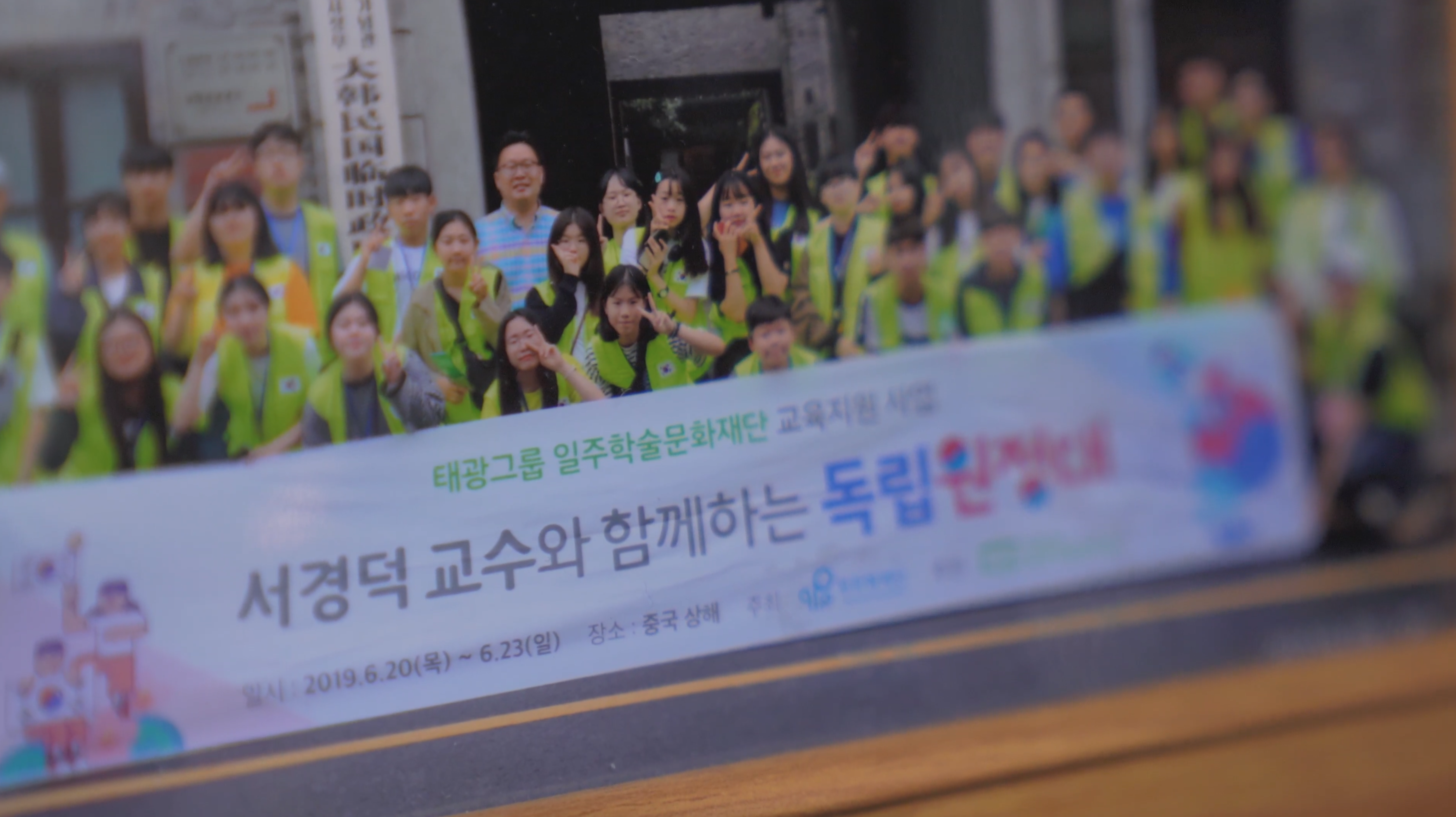
Hello, I’m Professor Seo Kyung-deok, and I’m dedicated to promoting Korean culture and history around the world. For the past 27 years—ever since my freshman year of college —I’ve been working to introduce Korea to the world.
Having devoted myself to promoting Korea for so long, people have started calling methe “KoreaPRexpert.” It’s a bit embarrassing, but I take it as a nickname given to encourage me to work even harder in the future .
Q. I’m curious to know what led you to pioneer this new fieldof“promot ing Korea.”

I first got involved in public relations work in Korea when I was in college; I wanted to do something meaningful that would also benefit society . So , I started by joining a student-run event club.
The clubwas called “Survival Competition.” Rather than focusing on the idea of fighting fiercely to survive, we founded the clubunder that nameto capture the inspiring image of ambitious college students engaging with people from around the world. Looking back, I think the club’s origins stemmed from our desire to serve as a bridge, enabling college students to communicate with society using their creative ideas on social issues.
When I was in college, I enjoyed having fun, but I also wanted to make a difference in people’s lives and do good for society —after all , you only live once .I figured that if I went through some trials and errors while I was still young, even if I wasn’t sure exactly what I’d end up doing later on,it would definitely be a huge help.Looking back now, I think those thoughts I had back then were pretty much spot on. Back when I was actively involved in club activities, I went around seeking sponsorships to raise funds , but getting sponsorship was harder than picking stars from the sky. No matter how good our ideas were, who would trust a group of college students enough to give us a large sum of money?So, back then, I compiled a list of corporate sponsorship contacts and reached out to them whenever I had a moment . Since building and maintaining those relationships was key , I’d call them whenever I had a chance .Now, 20 yearslater, I see that many of them have become executives at their companies.
Through these experiences,I realized that when people come together,they can create tremendous synergy.I think I really came to appreciate during my college years just how importantit is to choose the rightpeople to work with.
Q. What prompted you to start promoting Korea overseas in earnest ?
In 1996, when I first encountered the term“globalization,”I set off on a backpacking trip through Europe with the idea of experiencing firsthand how the world works. Once I was abroad , I found that foreigners often mistook me for a Chinese or Japanese person. It was a shock to realize that there was virtually no image of South Korea at all. That’s when I decided to take it upon myself to promote Korea, and that marked the beginning of my efforts to raise awareness about the country.
As soon as I decided to promote Korea, I spread the word that a Liberation Day event was being held in front of the Eiffel Tower in Paris—a place known for attracting the largest number of Koreans preparing to return home . That rumor spread among Koreans just like today’s viral social media marketing .
I had expected around 20 to 30 peopleto attend the event, but in the end, more than 300 peoplegathered. The event lasted two hours, with 300Koreans gathered in front of the Eiffel Tower in Paris, France , chanting “Manse” three times in unison and singing the national anthem and “Arirang.”
I still can’t forget the earnest expressions on the faces of the people who participated in that event. Through that experience, I realized that with strategic preparation, we can certainly create opportunities to promote South Korea abroad .
Q. What motivates you to continueyour efforts to promote Korea?
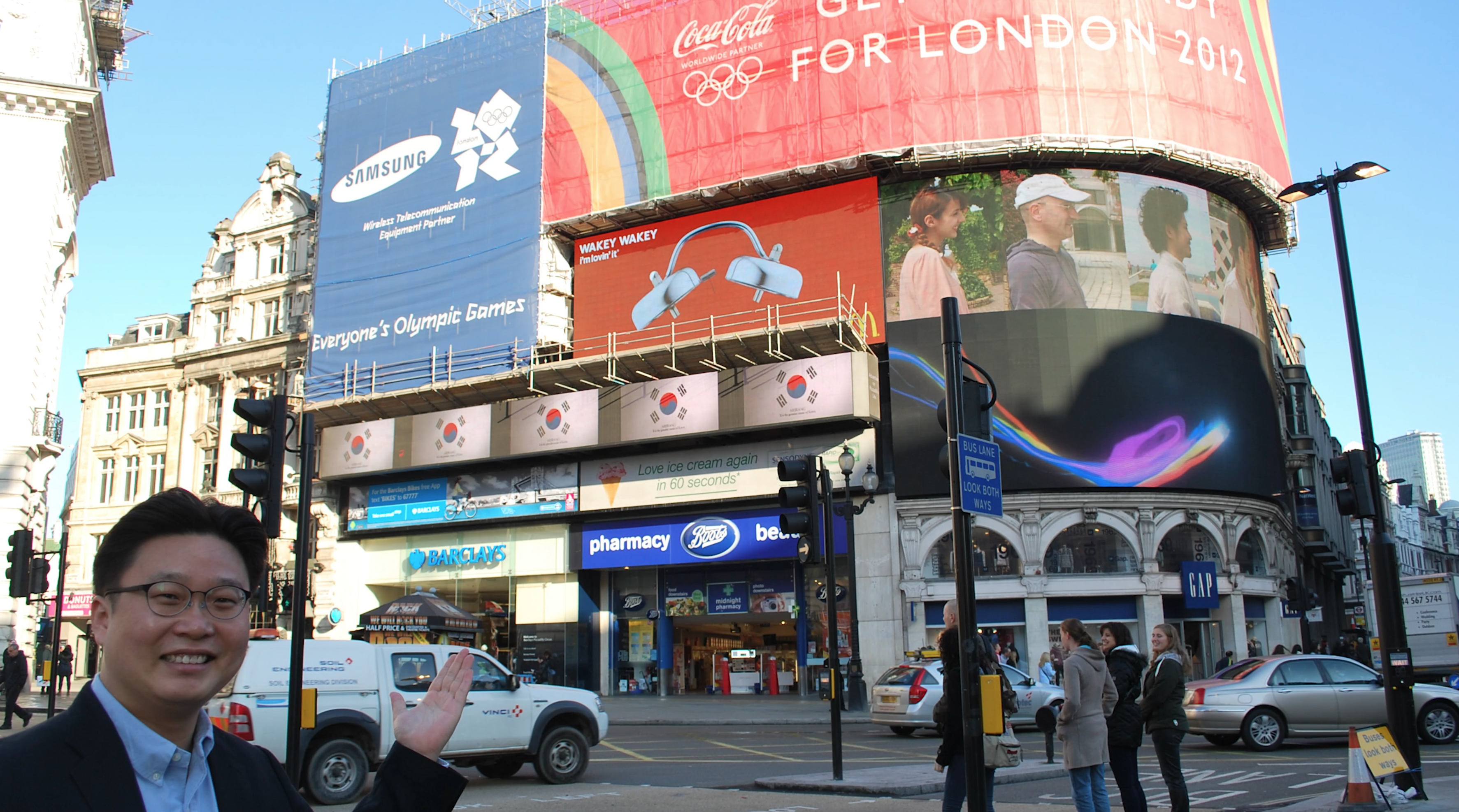
It’s simply fun to see how the world is changing through our efforts to promote Korea. To give you one example, for the past 10 years, I’ve been working with actress Song Hye-kyo to provide Korean-language services at famous art galleries and museums around the world.Just 10 yearsago, Korean wasn’t available at major international art galleries or museums, and that really hurt my pride.
So I just showed up at the Metropolitan Museum of Art in New York. From the museum’s perspective, here was someone who wasn’t a government official or a business leader representing a country, yet I came in and said I wanted to provide Korean-language services. They didn’t believe me and asked where I was getting the money to do this.
So I told them that if I had the contract, I could raise the funds. It took six monthsto draw up the contract . As I boarded the flight back to Korea with the contract I’d secured after persuading the Metropolitan Museum of Art in New York, I thought to myself that with this single piece of paper, securing sponsorship would be no problem.
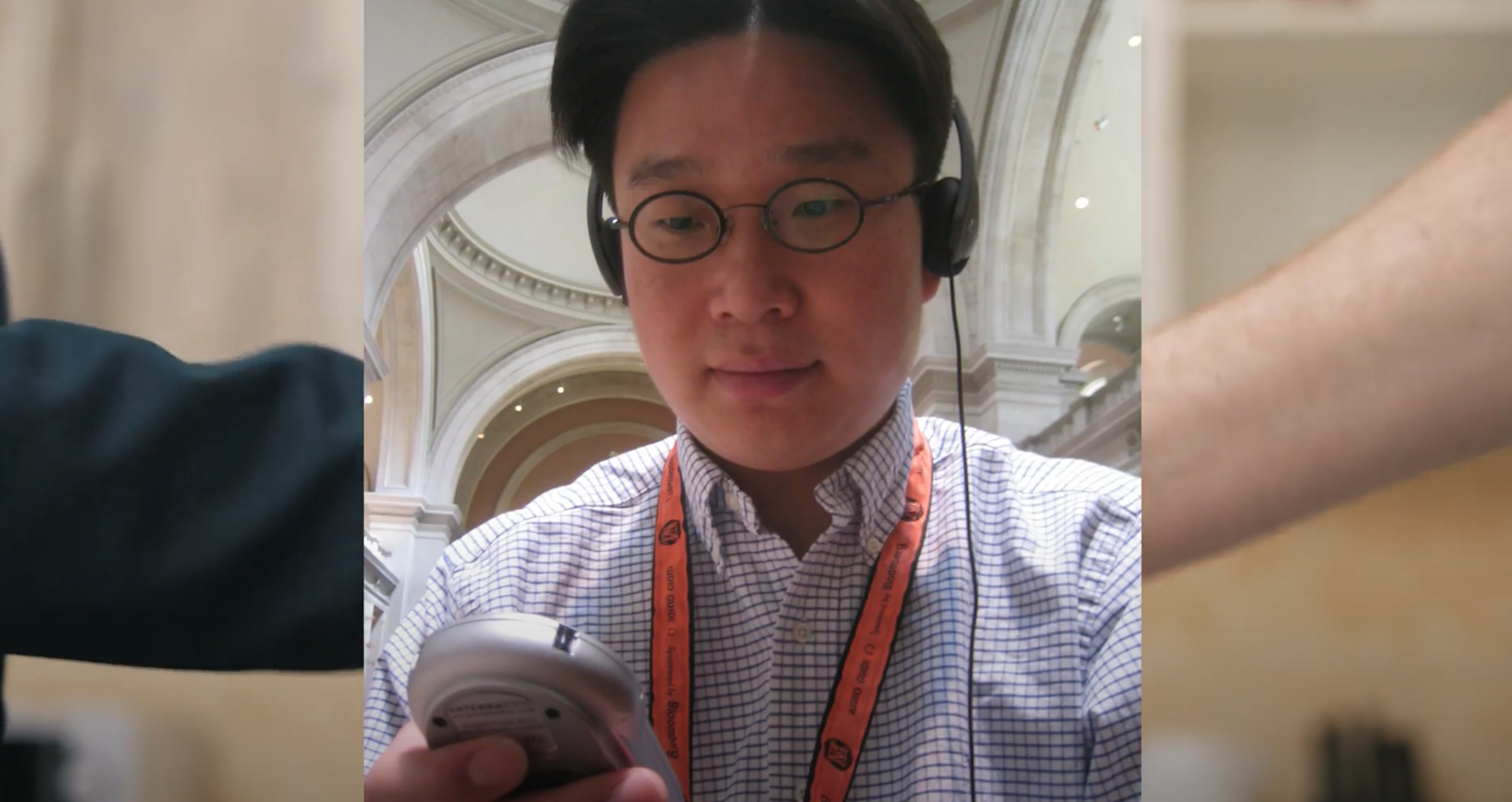
After returning to Korea, I think I visited over 200places over the course of about six months to seek sponsorship. Many people understood that it was a worthy cause, but they would ask, “Why are you doing this?” Every time , I would reply,“It’s something that absolutelyneeds to be done, so someone has to do it, doesn’t it?”
When a sponsor finally stepped forward and the Korean audio guide service launched at the Metropolitan Museum of Art in New York , it was truly a moving moment. Although the process is always challenging, experiencing firsthand those moments when change finally takes hold is what keeps me going.
Maybe that’s why I’ve never once regrettedasking myself , “Why did I do this?” or “ Whyam I doingthis?” In fact, I tend to feel regret when a project I’ve worked on doesn’t yield good results. When that happens, I analyze why the outcome wasn’t satisfactory so I don’t make the same mistake again. I think it’s important to use that analysis to make an effort not to repeat that mistake.
I’ve faced many challenges along the way, and having started at a young age , I’ve had a lot of experiences I never could have imagined. Looking back, I think the fact that I was able to share this journey with so many people is what has made these the happiest times of my life.
Q. Why must we protect Dokdo?
A nation’s most fundamental foundation is its territory. It makes no sense for us not to be able to defend our own territory. That is why defending Dokdo, our territory, is something we must do as a matter of course. Because Dokdo is our land, we must defend it.
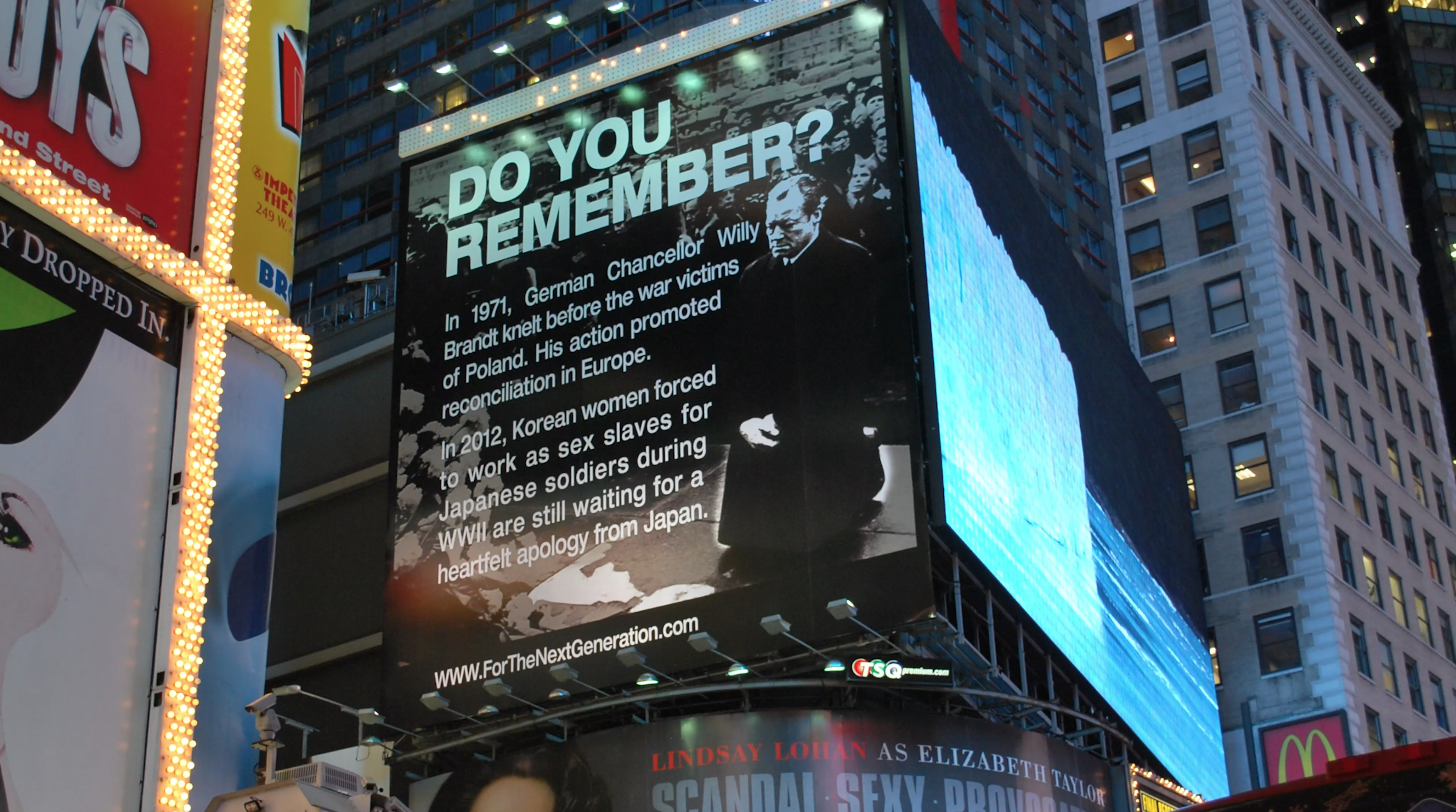
On the one hand, some people say they’re tired of hearing the claimthat “Dokdoisourland.” However , Korean netizens have shown me tremendous support in response to that sentiment. With the aim of rallying behind my efforts, approximately 100,000 people— the largest numberever— raised 210 millionwon—the highest amount ever—in justfour weeks .
I used that money to place a full-page ad in *The Washington Post* calling for an end to the distortion of history. At the bottom of the ad, I included the caption: “Thisad was created through the combined efforts of 100,000South Korean netizens.” The ad was featured in international media and had a greater impact than I had anticipated. It was another opportunity for me to witness the ripple effect that can be created when many people join forces.
Q. It seems that the importance of working together is a recurring theme in everything you’ve said so far .

There are truly all kinds of people in the world, and each one plays a vital role in shaping it. After all, the world is built by people from all walks of life. That’s why I’ve come to realize that there’s nothing in this world you can do entirely on your own. Even with tasks you could handle alone , you can often achieve so much more when you seek help from others.
Having seen firsthand how the combined efforts of many people can create tremendous synergy, I can confidently say that when it comes to national issues, if the entire nation takes an interest and acts together, we will certainly be able to correct what is wrong.
Q. What are your future plans or goals?
I still have a lot to do and a lot I want to do . It will soon be 30 yearssince I began promoting Korea. I feel like I’ve just finishedthe “first act”of promoting Korea. So I’m looking forward tothe “second act”that will unfold over thenext 30 years.
So, I am currently making plans to fill theremaining 30 years of my life. Now , I want to go beyond simply promoting our country to the world and focus on fostering the power that arises when people connect with one another. I want to spend the next 30 yearsnot only promoting South Korea in a more sophisticated way than before, but also finding ways for foreigners to truly enjoy Korean culture.
I’ve never really thought about what I’d like my tombstone to say, butI’d love it if people could think of me simply by seeingthe words “Promoting Korea.” I’ve spent more than half my life doing this work, and I plan to devote the rest of my life to promoting Korea as well, so I hope“Promoting Korea”becomes the phrase that best represents me.
Where does your sincerity lead? No matter how impossible a task may seem, if you give it your all, positive change is bound to follow.
Just as he has changed the world up to now, Wadizwill stand by Professor Seo Kyung-deok as he continues to devote his whole heart to bringing about change in the world.
Go toWadiz
Get Started withWadiz
The A to Z ofWadiz Go to Maker Center
Get Answers to Your QuestionsWadiz