


We are neighbors in Seongsu-dong.
Living in the same neighborhood means sharing both the good times and the bad. That’s why, when someone moves in, the first thing they do is pass around rice cakes, saying, “Let’s live well together from now on—please take care of me.” It’s because we are a “community” that relies on one another to get by.
When I think back to my childhood, there was always a place where the neighbors would gather. At that spot—which we called our “hangout”—we’d gather in small groups to share snacks, discuss the neighborhood’s big and small events, and brainstorm ideas for making our community a better place.
It’s been three years since Space Wadiz became a part of the Seongsu-dong community. Space Wadizhas brought the people of Seongsu-dong together! WadizSpace Wadiz, everyone shared their unique talents, gathered neighborhood news, and brainstormed ideas to make Seongsu-dong a better place and foster community development.
The “handmade shoes” of a Seongsu-dong native, the rising star “café,” and the budding “college students” in the Seongsu-dong area. We headed there to see Wadiz, a space where locals come together to enjoy good food and a good life.
Saetbyeol, a café in Seongsu-dong
Low Coffee Stand, Upside, A2B, Oudo. Have you heard of any of these cafes? If you’re someone who’s been around the Seongsu-dong cafe scene, you’re sure to know them These famous cafes have come together WadizWadiz—united by a shared commitment to the environment.

How much waste do you think a single cup of coffee generates? Takeout cups, straws, paper towels…
The hidden coffee waste we often overlook is “coffee grounds,” or coffee residue. It is said that more than 7 out of 10 adults in Korea drink at least one cup of coffee a day. As coffee consumption continues to rise, coffee grounds exceeded 350,000 tons as of 2020.
Despite its pleasant aroma, this "fragrant waste" comes with a host of problems. Coffee grounds are classified as general waste, not food waste, and emit large amounts of carbon when incinerated. What’s more, with landfill space becoming increasingly scarce, coffee grounds are a real headache—a waste product that’s hard to dispose of properly.
Space Wadizcafes in Seongsu-dong launched the “Green Exchange” project to raise awareness about the environmental issues associated with coffee grounds as waste and to share ways to repurpose them as a resource. Cafés brought their used coffee grounds Wadiz, where they were exchanged for pencils made from the grounds. Each pencil uses 20 grams of coffee grounds, and since a single cup of coffee produces about 15 grams of grounds, it’s truly a wonderful, creative world where you can enjoy a cup of coffee and make a pencil—killing two birds with one stone!

Upside Coffee, a café participating in the “Green Exchange” initiative
On my way WadizSpace Wadiz, I easily found a café that partners with Green Exchange. Here, anyone can pick up coffee grounds.
The owner shared this feedback on their participation: “We usually end up with a lot of coffee grounds that just get thrown away, so I’m grateful they proposed a project with such a meaningful purpose!”
As I stepped into the Wadiz courtyard carrying my coffee grounds, a mint-colored minibus was rumbling away. The minibus is a magical box that turns coffee grounds into pencils. When you put the coffee grounds into the coffee bus, they turn into clay, and it dispenses pencils like rice cakes. All you have to do is insert a lead, and it’s done.
As I took the coffee grounds from my cup Wadizand watched them being turned into pencils, I realized, “There are so many creative works in the world, and so many different ways to care for the environment.” Perhaps this is why so many Green Makers dedicated to protecting the Earth emerge every year through crowdfunding?
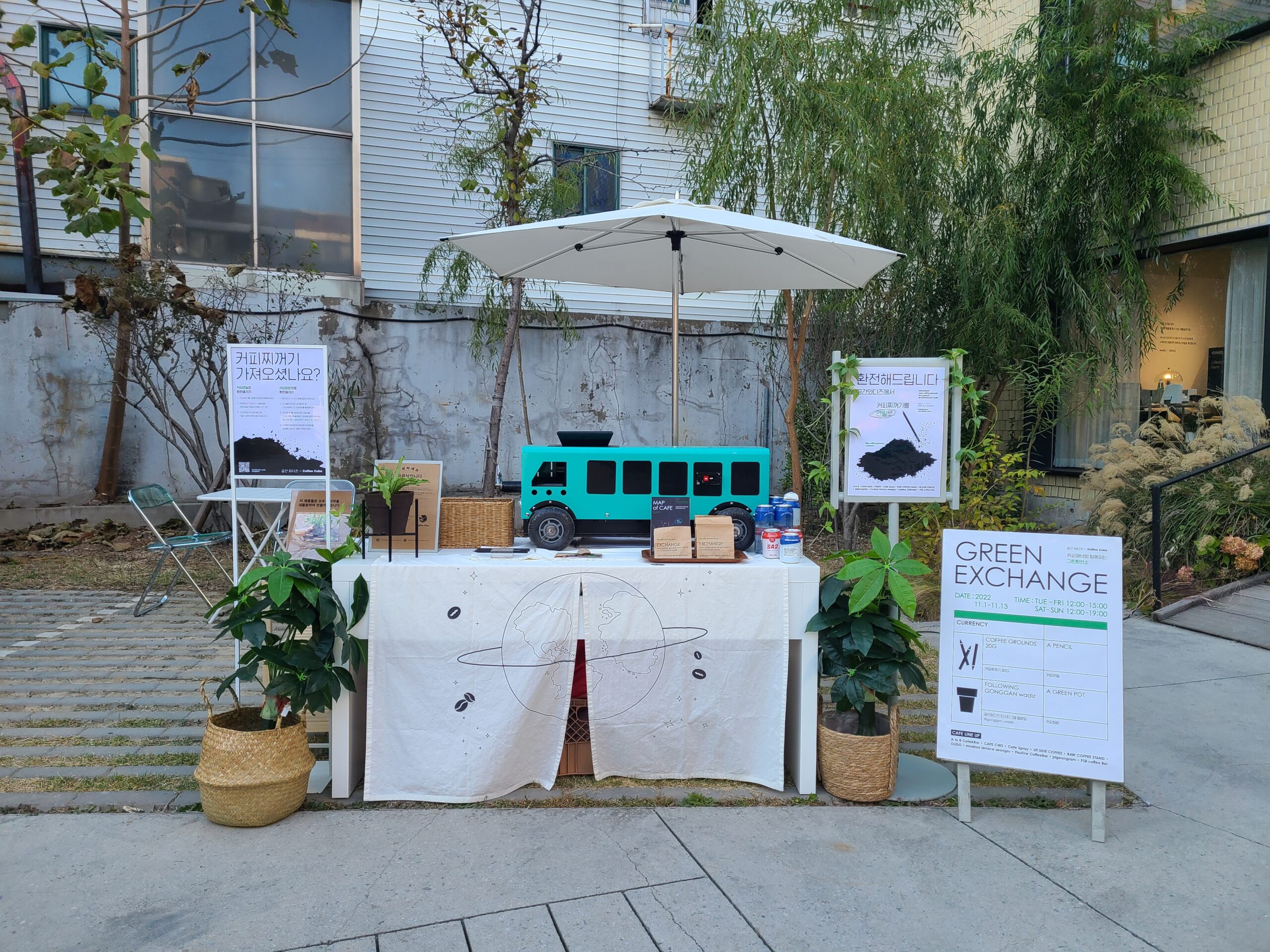
This is the Green Currency Exchange 🌿
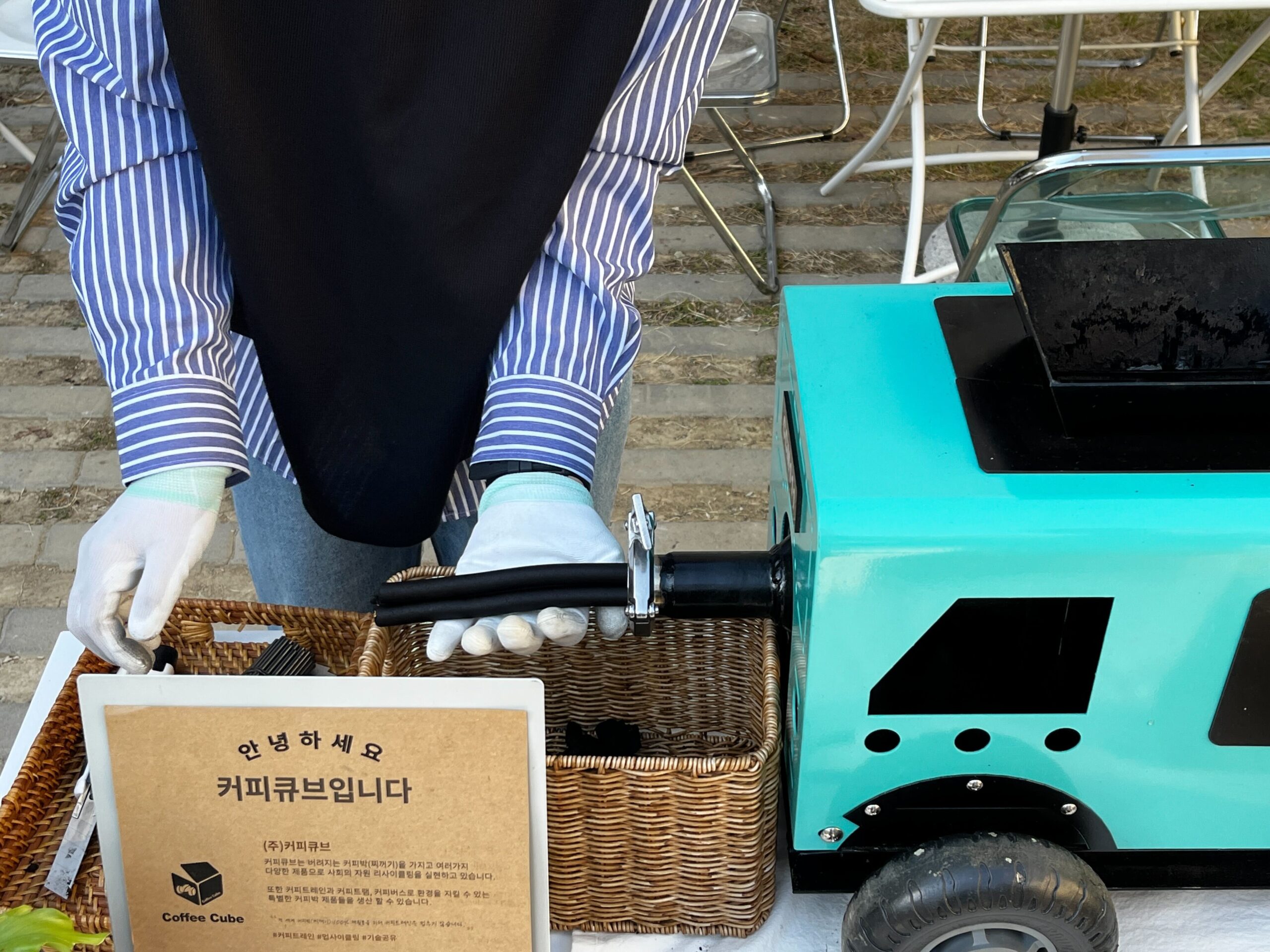
Coffee grounds turned into clay are being made into pencils.

Now, just insert the pencil lead and let it dry thoroughly, and you’ll have a sturdy pencil.
A Seongsu-dong Native, Handmade Shoes
As you step out of Seongsu Station, the first street you encounter is lined with old steel structures and unadorned buildings. They serve as a reminder that, long before the trendy new cafes and pop-up stores emerged, this area was home to manufacturing. Since 1970, Seongsu-dong has built a rich history of handmade shoes. Today, Seongsu-dong is Korea’s largest neighborhood dedicated to handmade shoes, home to 70% of the country’s handmade shoe manufacturers.
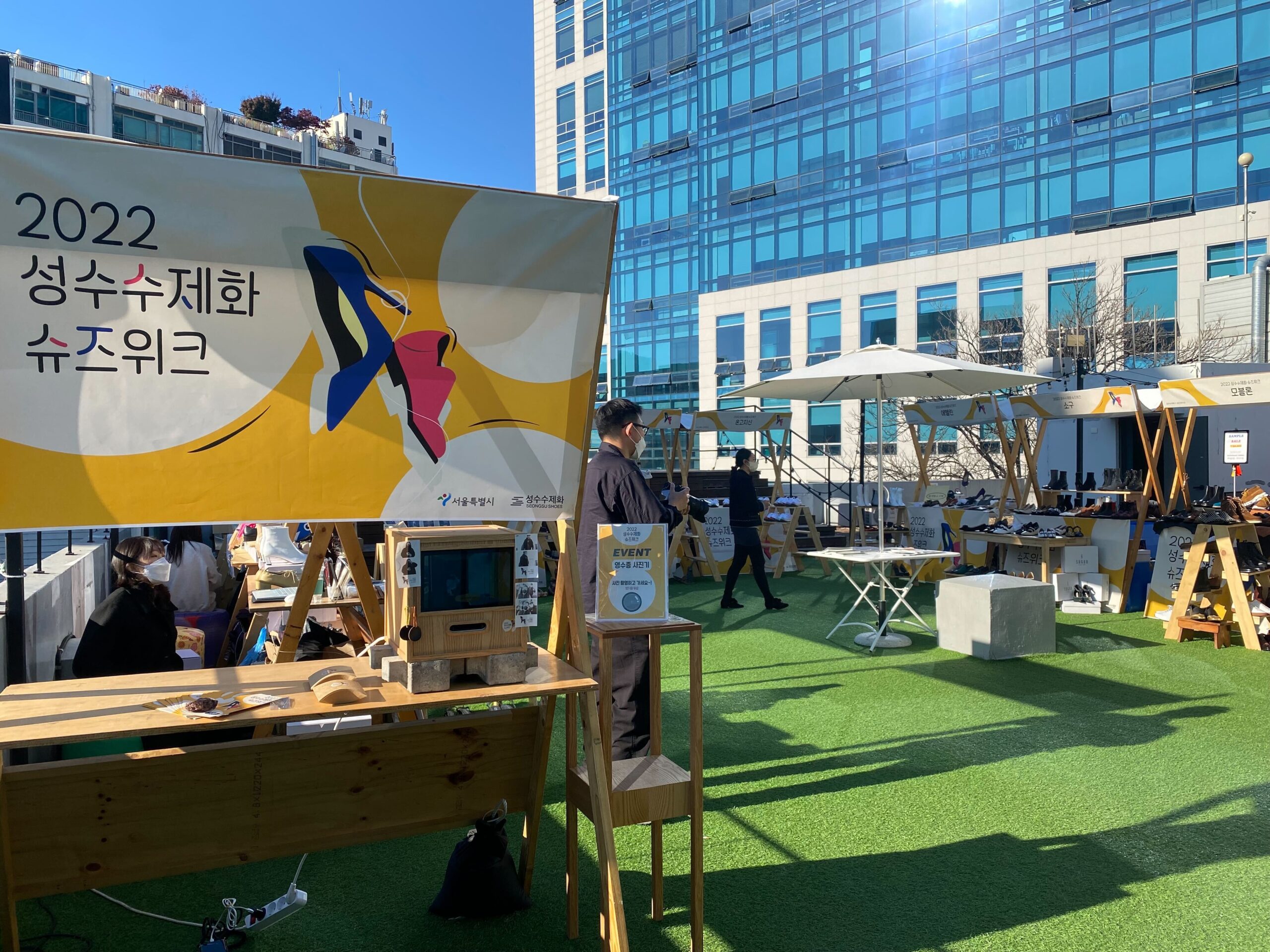
Seongsu-dong’s long-standing handmade shoe brand has come Wadiz! The 2022 Seongsu Handmade Shoe Week was held WadizWadiz. Seongsu Handmade Shoe Week is part of the Seongsu Handmade Shoe Support Project, which aims to discover emerging creators in the handmade shoe industry and assist entrepreneurs and professionals with distribution and sales channels.
Seongsu Handmade Shoe Week is very similar Wadiz, which discovers small brands and supports makers in their endeavors. In particular, since Space Wadizbegan in an old printing house, it shares a similar history and values with the Handmade Shoe Week.
The handmade shoes on display in the special zone on the first floor Wadiz went beyond the concept of “clothing”—one of the three essentials of human life—to become works of art. There was a wide variety of exhibits to see, ranging from products developed through collaborations between Seongsu’s handmade shoe artisans and artists, to the “Capturing Seongsu, Seongsu in My Feet” art exhibition, and the “Passing on the Craft” exhibition showcasing family business succession projects.
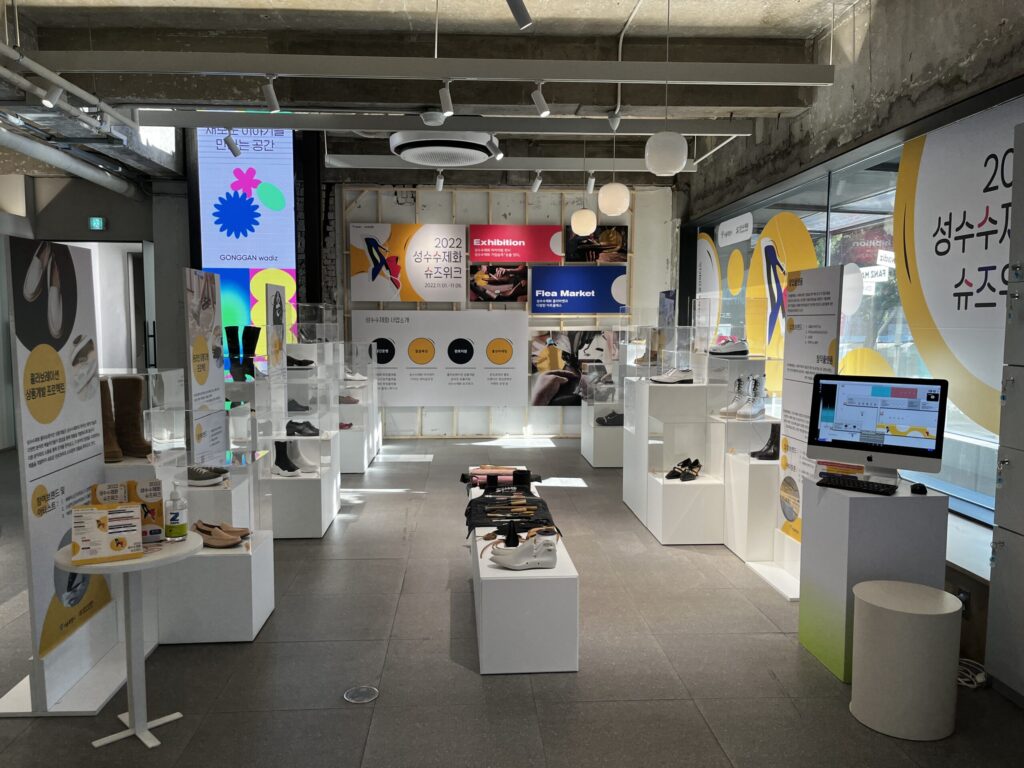
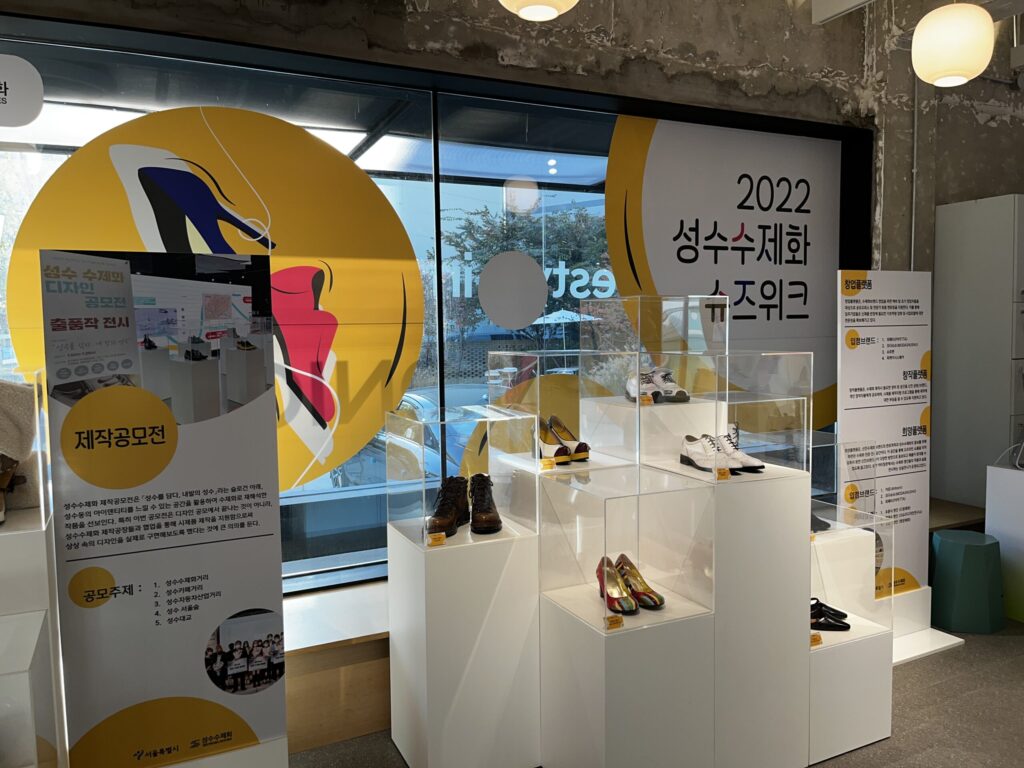
A flea market was also held on the Wadiz Rooftop. The market was more than just a place for the exchange of goods and money; it was a space where producers and consumers connected by sharing brand philosophies and stories. Just like a crowdfunding campaign.
Seongsu-dong Saessak, College Student Exhibition
When you first learn to ride a two-wheeler, just knowing that someone is holding onto you from behind makes you feel incredibly secure. Space Wadizprovides opportunities for nearby university students, whose heads are full of dreams, to take on new challenges without being held back by spatial constraints. For college students near Seongsu-dong, Space Wadizis a reliable “backing” that lets them showcase their talents!
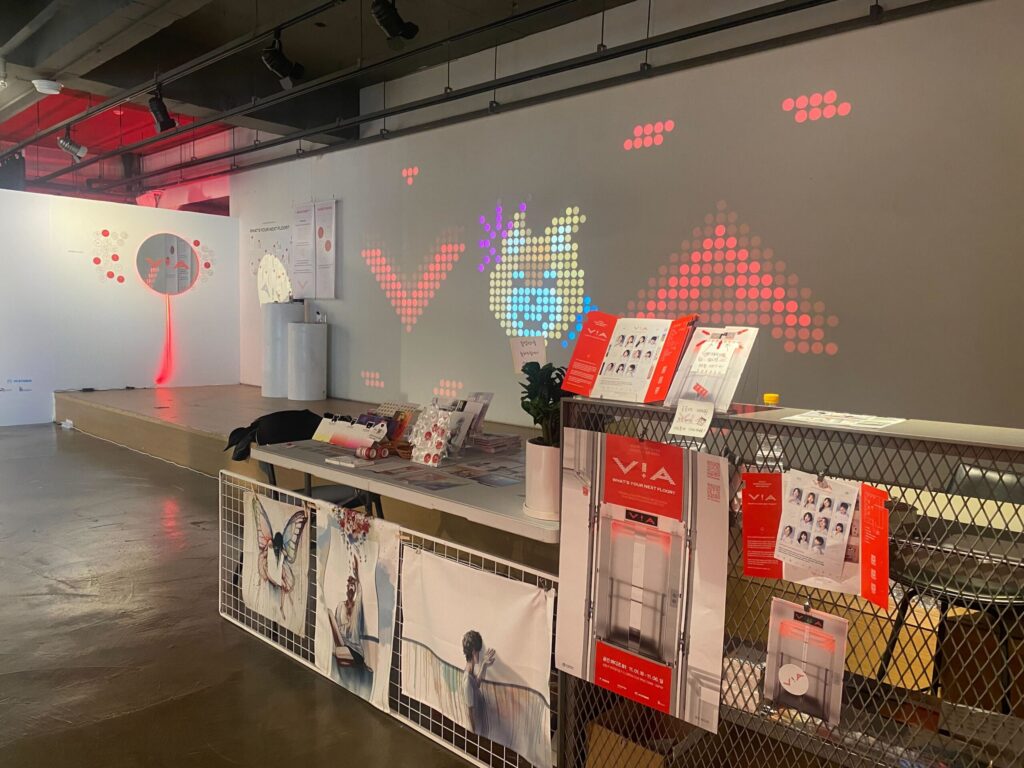
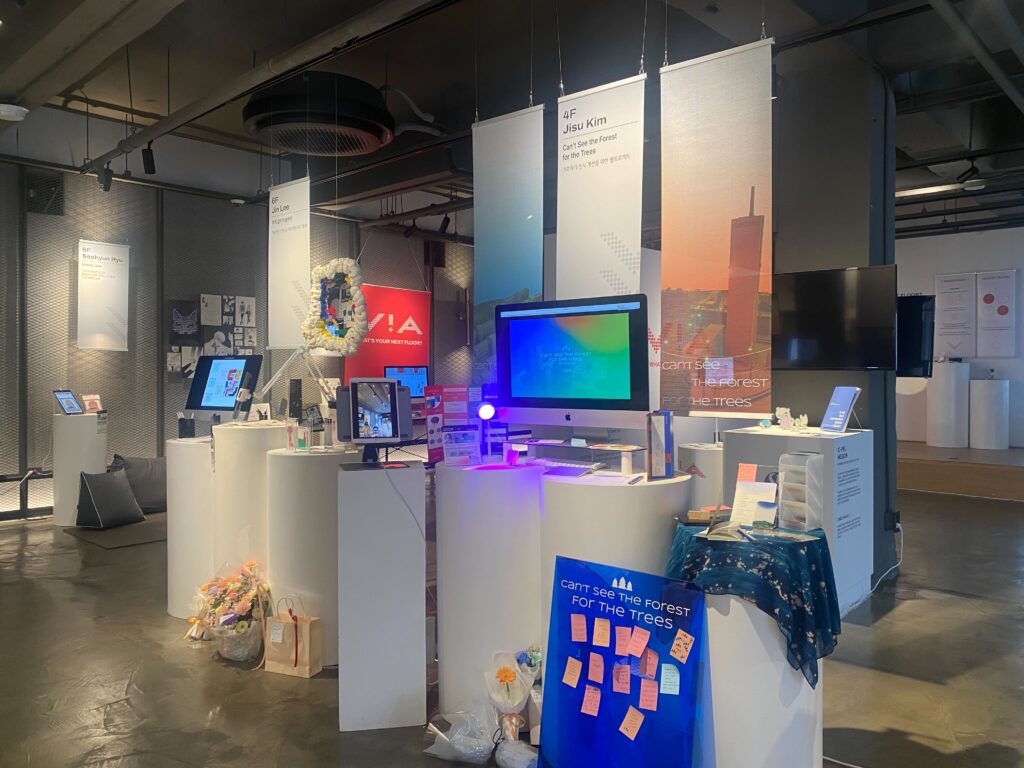
Both the housing improvement project for vulnerable communities by architecture students from Konkuk University and the graduation exhibition by students from the Department of Applied Art Education at Hanyang University were held in the basement of Space Wadiz. Stepping outside the confines of their campuses, the students found new inspiration and created their work in a space teeming with diverse challenges.
In Seongsu-dong, Wadiz: A Space for Taking on Challenges Together
“Let’s go to OO-dong instead of Seongsu-dong.” “Where’s the next Seongsu-dong?” I often see comments like these. Still, I believe Seongsu-dong remains the place to be. That’s because pop-up stores keep popping up there one after another, and new brands continue to emerge day after day.
Seongsu-dong isn’t just a place that chases after the latest trends and fleeting fads; it’s a place with depth, history, and a diverse range of perspectives. Because these two seemingly opposing values coexist in harmony, many brands continue to take on new challenges here, and people flock to Seongsu-dong in search of those very challenges.
There are still many stories left to tell in Seongsu-dong, and new ones are constantly being created.
You can look forward to seeing Wadizevolve into a space where we share these stories with our neighbors in the way we do best 😉
Go toWadiz
Get Started withWadiz
The A to Z ofWadiz Go to Maker Center
Get Answers to Your QuestionsWadiz


